












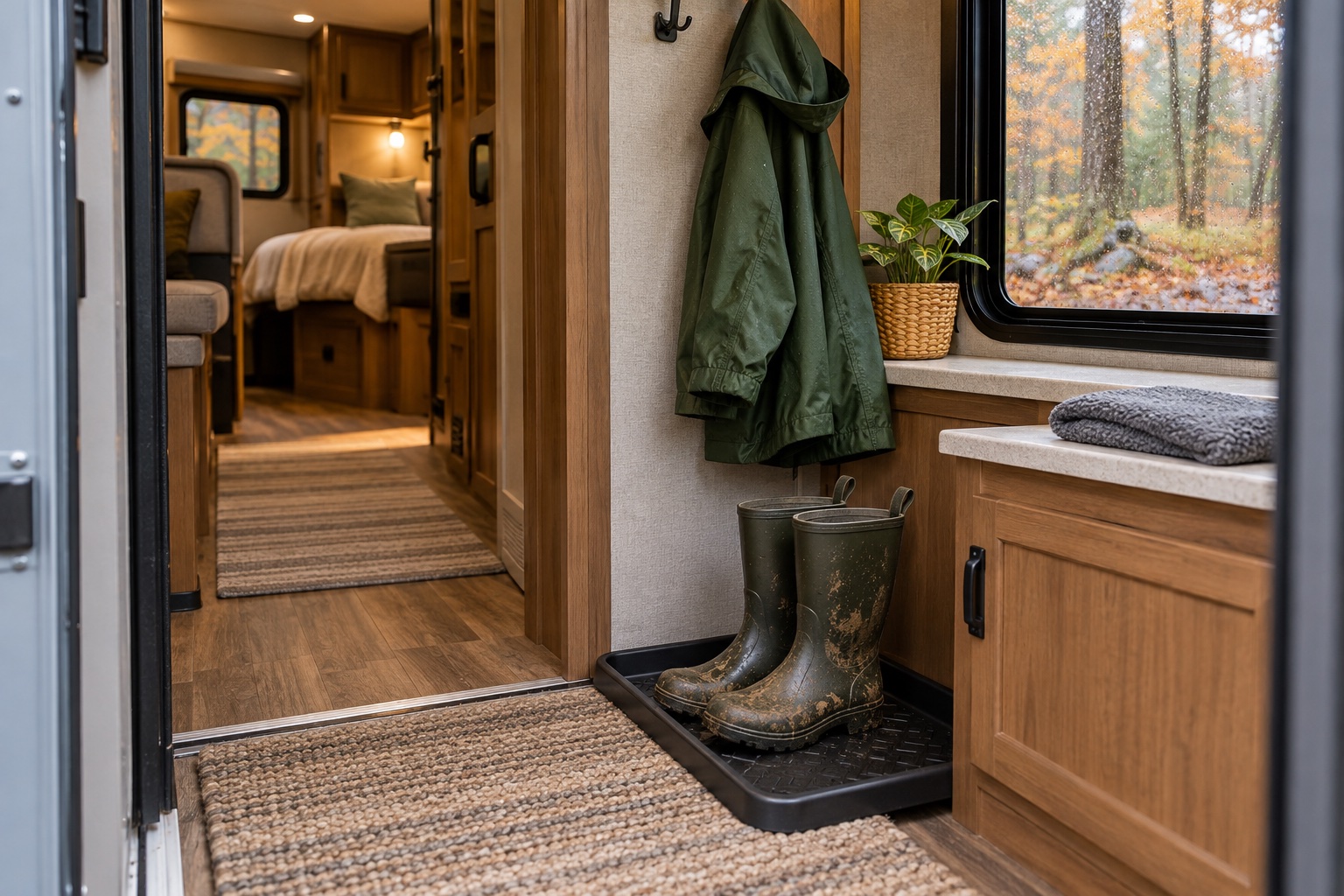
A rainy camping day becomes much easier to enjoy when the doorway has a job. Boots stop in one place, jackets have somewhere to wait, and the person making lunch can still reach the kitchen. A small entry routine can keep the whole RV from becoming a collection of damp things.
Start with the space you already have. This is a planning guide for ordinary wet-weather comfort, with suggestions to adapt to your floor plan. Follow current local weather alerts and campground instructions whenever conditions change.
Check the day before rearranging the camper
The National Park Service recommends asking a ranger or campground host about current hazards, forecast weather, and local rules when you arrive. Its arrival guidance is a useful starting point before choosing the day’s activities. A forecast that changes your walk may also change where you keep coats, shoes, and the dog’s towel.
Give the group a simple choice: a short outing with dry things ready afterward, or a quieter day based at camp. Anyone who stays inside should still have a comfortable seat and access to their belongings. If this is your first outing together, our first family RV weekend guide can help keep the plan manageable.
Build a landing zone without blocking the doorway
Walk through the entry sequence before buying an organizer. Imagine coming in while carrying groceries, helping a child, or holding a leash. Where can you pause without crowding the steps? Where will the wet item go next? Keep the walking route, door operation, and exits clear.
A removable tray may work for footwear if it fits the available floor space. A washable cloth can be kept nearby for wiping the tray and surrounding floor. Put dry shoes in a separate, reachable place so the next person does not need to move every pair to get out.
Use existing storage points that suit the vehicle. Before attaching hooks or drilling into a wall, check the RV manufacturer’s instructions and the limits of the mounting location. The goal is a repeatable place for a few things, not another installation project during a wet afternoon.
Give each wet item a next step
“Leave it by the door” works for a moment. It works less well when several people return at once. Decide who moves jackets, who checks the footwear tray, and where a used towel waits before washing. Keep wet gear away from bedding, paperwork, and food preparation surfaces.
Choose a drying arrangement appropriate to the vehicle and the item’s care instructions. Do not drape clothing over heaters, cooking appliances, electrical equipment, or exits. If the campground has a laundry facility, confirm its current hours rather than assuming it will be available when you return.
Keep one indoor activity ready to use
A deck of cards stored behind the outdoor chairs is not much of a rainy-day plan. Keep one compact activity where it can be reached with the beds made and normal belongings in place. That might be a book, sketchbook, small game, or downloaded film with headphones.
Set aside one usable surface and agree when it changes jobs. A dinette may be a work area in the morning, lunch table at noon, and game space later. Clearing it between uses makes a small interior feel more workable. When considering another vehicle, compare this ordinary indoor routine alongside the points in our travel trailer versus motorhome guide.
A five-minute reset before the next outing
- Check current weather and campground notices.
- Return dry items to their normal storage.
- Empty and clean the footwear tray as appropriate.
- Replace the used cloth with a dry one.
- Make sure doors, exits, and the walking route remain clear.
The National Park Service also advises checking seasonal campground facilities and weather expectations; services may change outside peak season. Build your routine around what is actually available at your stop.
You do not need to fill every rainy hour. A clear doorway, somewhere for wet gear, and one pleasant thing to do can be enough to let the weather become part of the trip.
Sources checked October 23, 2026. Feature image: original AI-generated editorial illustration; it does not depict a named RV model or campground.