














As the calendar turns to late autumn, the transition to shoulder-season and winter travel requires a shift in how you pack and prepare your rig. While summer trips may focus on convenience, winter travel demands a focus on self-reliance. Whether you are planning a final trip of the year or preparing for a winter base, adapting your emergency kit is a critical step in your seasonal maintenance routine.
Adapting the Basic Emergency Kit for RV Life
According to guidance from Ready.gov, an emergency kit is a collection of basic items your household may need to survive on your own for several days. For an RV, this means your kit must be portable, organized, and accessible even if your primary power or heating systems fail. Unlike a standard home kit, your RV kit needs to account for the mobility of your living space.
To build a foundational kit, start by gathering these essential items into one or two easy-to-carry containers, such as plastic bins or a duffel bag:
- Water: Aim for one gallon per person per day, covering both drinking and sanitation needs.
- Food: A supply of non-perishable food that lasts for several days.
- Communication and Lighting: A battery-powered or hand-crank radio, a NOAA Weather Radio with tone alert, and a reliable flashlight.
- First Aid and Hygiene: A stocked first aid kit, moist towelettes, garbage bags, and plastic ties for sanitation.
- Tools: A wrench or pliers to turn off utilities, and a manual can opener.
- Safety Signals: A whistle to signal for help and a dust mask to help filter contaminated air.
- Documentation: Local maps and important family documents, such as insurance policies, saved electronically or in a waterproof container.
Before you depart, ensure this kit is stored in a designated place that all travelers know. If you are struggling with organization, consider building a departure checklist that includes a final verification of your emergency kit’s location and status.
Winter-Specific Additions for RV Travel
When traveling in colder months, the standard kit requires specific additions to address road conditions and vehicle maintenance. As noted in the Car Safety guidelines from Ready.gov, keeping a kit in your vehicle is essential for instances where you might become stranded. In an RV, these items are even more critical due to the size and weight of the vehicle.
Incorporate these winter-specific items into your RV storage:
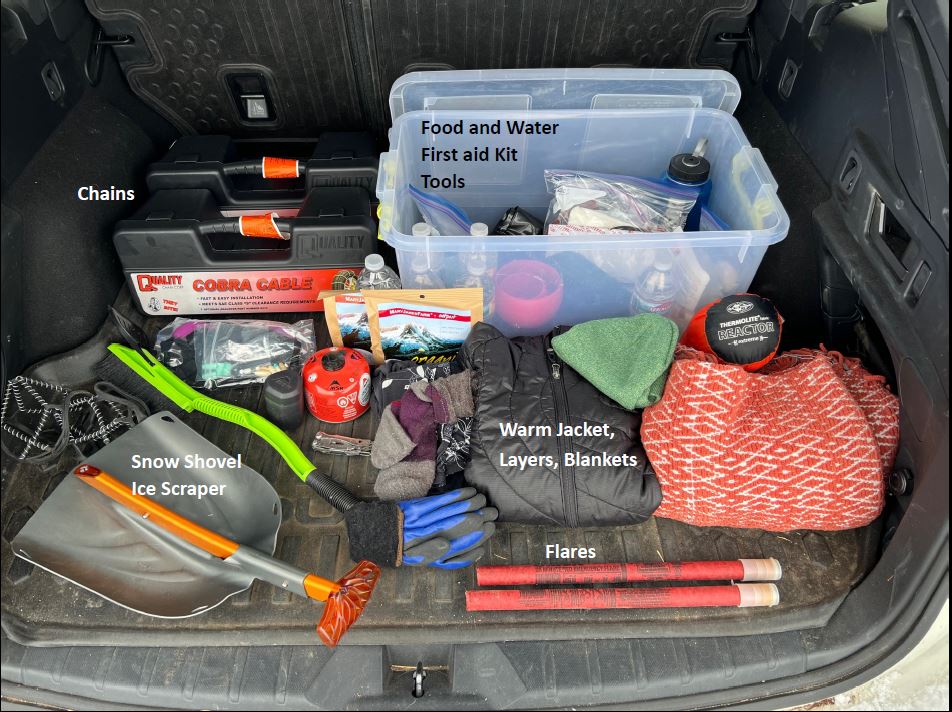
- Traction Aids: Keep sand or cat litter on hand to provide better tire traction if you get stuck in snow or ice.
- Visibility and Clearing: Include an ice scraper for your windshield and reflective triangles or flares for roadside safety.
- Warmth: Pack a blanket for each person in the vehicle.
- Maintenance Items: Keep jumper cables in an accessible storage bay.
Beyond the physical gear, your winter safety plan must include vehicle preparation. Before heading out, have a mechanic check your antifreeze levels, battery and ignition system, brakes, exhaust system, and fuel and air filters. Furthermore, keep your gas tank full. A full tank is a crucial safety measure in winter; it prevents the fuel line from freezing and ensures you have enough fuel if you are forced to idle for heat during an emergency.
Always be aware of road conditions. If you are driving on slippery, icy, or snowy roads, disable your vehicle’s cruise control. If you lose traction, cruise control will attempt to accelerate to maintain your speed, which can cause your wheels to spin faster and lead to a loss of control. If you are unsure about the condition of your tires, prioritize learning your tire information before the warning light appears, as discussed in our guide on RV tire information and maintenance.
Maintaining Your Safety Plan and Kit
A kit is only as useful as its contents. Maintaining your emergency kit is an ongoing responsibility. As outlined in the planning resources at Ready.gov, you should rethink your needs every year and update your kit as your family’s situation changes.
Use this checklist to maintain your kit throughout the winter season:
- Rotate Supplies: Check expiration dates on food and water. Replace any items that have expired.
- Check Tech: Ensure batteries are fresh in your flashlights and radios. If you use a portable battery for charging, ensure it is fully charged before departure.
- Review Documentation: Verify that your insurance information and contact lists are current.
- Personalize for Needs: Consider specific needs such as prescription medications, pet supplies, or infant care items.
- Practice: Discuss your evacuation route and family communication plan with everyone traveling in your RV. Knowing where to go and how to contact each other if separated is just as important as the physical supplies you carry.
By treating your emergency kit as a dynamic part of your RV setup rather than a static box in a storage compartment, you ensure that you are prepared for the unpredictable nature of winter road travel.
Representative photo: This image illustrates the essential components of a winter emergency kit, such as snow removal tools, warmth items, and supplies, which are critical for RV safety. Photo: Oregon Department of Transportation / Wikimedia Commons · CC BY 2.0. Resized for display. Sources checked October 23, 2026.