













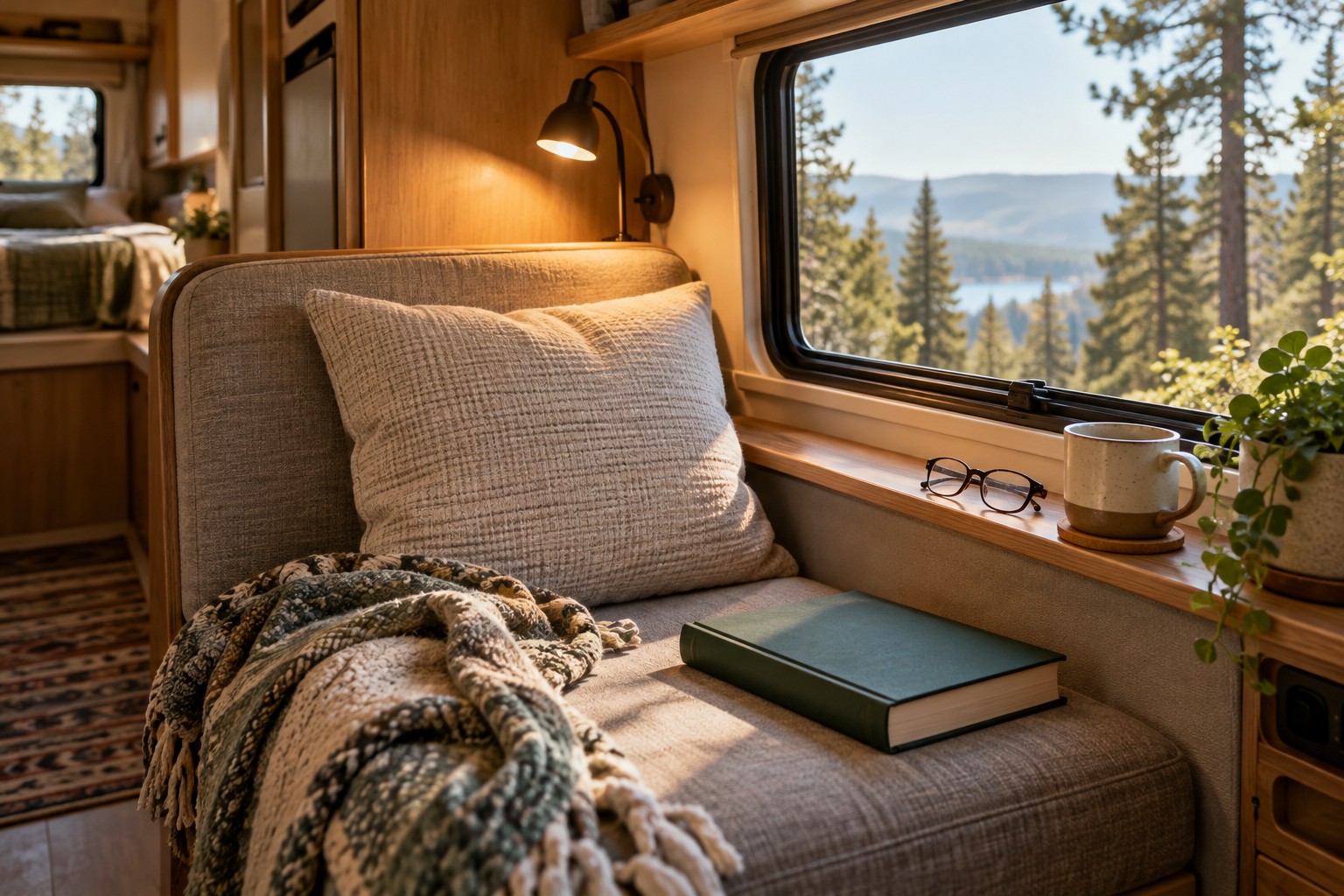
A reading corner does not require a spare chair, a rebuilt interior, or a photograph-ready shelf. In a small RV, it may simply be the comfortable end of the dinette after breakfast. What matters is whether you can settle in without moving six other things first. Designing for that ordinary hour can make a compact interior feel more generous.
Begin with the space you already use. Sit there with the book or device you actually read, wearing your usual glasses if needed. Notice your feet, elbows, back support, the position of the page, and what happens when another person walks past. This is a comfort exercise, not a reason to order furniture from a photograph.
Choose the seat before adding accessories
A deep lounge seat and an upright dinette ask different things of the reader. Try a folded blanket or an existing cushion before buying support. Keep the arrangement easy to remove so the seat can perform its other jobs. A permanent pile of pillows can make getting to storage more difficult than it needs to be.
Consider the view at different times of day. A wonderful morning window may produce glare later. Test the fitted shade and your normal position rather than assuming a brighter lamp will solve everything. If reading at the table works better than reading in the lounge, accept that answer. The useful corner is the one you enjoy using.
Put light on the page
Use the RV's existing reading light first and see whether another traveler can comfortably use the adjoining space. Keep cords away from the aisle, moving furniture, and the routes to doors or exits. Any added electrical fitting needs to suit its power source and the vehicle installation; follow its instructions rather than improvising a mount or connection.
For a rechargeable portable light, decide where it lives while charging and where it is secured during travel. Look for a control you can reach without standing up. The difference between a practical light and another loose object is often the storage plan rather than the brightness claim on the package.
Give books a modest boundary
Choose a small, accessible place for current reading and keep the rest elsewhere. A pouch for an e-reader, cable, and glasses can be easier to manage than several open shelves. For paper books, test the actual height and depth of the compartment and use the vehicle's appropriate storage restraints for travel.
Avoid using the floor beside a favorite seat as the permanent bookcase. That space often becomes a walking route, a pet's resting place, or access to equipment. Keep ventilation openings, controls, and emergency access clear. Before departure, return every reading item to its travel location instead of trusting the campsite arrangement to hold together on the road.
Make the changeover easy
Create a one-minute routine: clear the seat, place the light, get the current book, and put a drink where an accidental elbow will not send it across electronics. When you finish, reverse the steps. This helps a shared interior support both quiet time and everyday movement.
Agree on the hour as well as the corner. One traveler may prefer music while another wants to read; headphones or a walk can be a friendlier solution than redesigning the entire camper. Save the seat for comfort, not for a contest over whose belongings have priority.
A small RV gains a great deal when one ordinary pleasure has a dependable place. You may still read outdoors on a fine afternoon. On a wet evening, however, a familiar light, a comfortable seat, and a book you can find are a worthwhile form of space.
Keep exploring
Walk an RV floor plan with the beds made. Plan shared RV routines with friends.
Featured image: Original AI-generated editorial illustration created for this article. It does not document a real visit or a product test.