













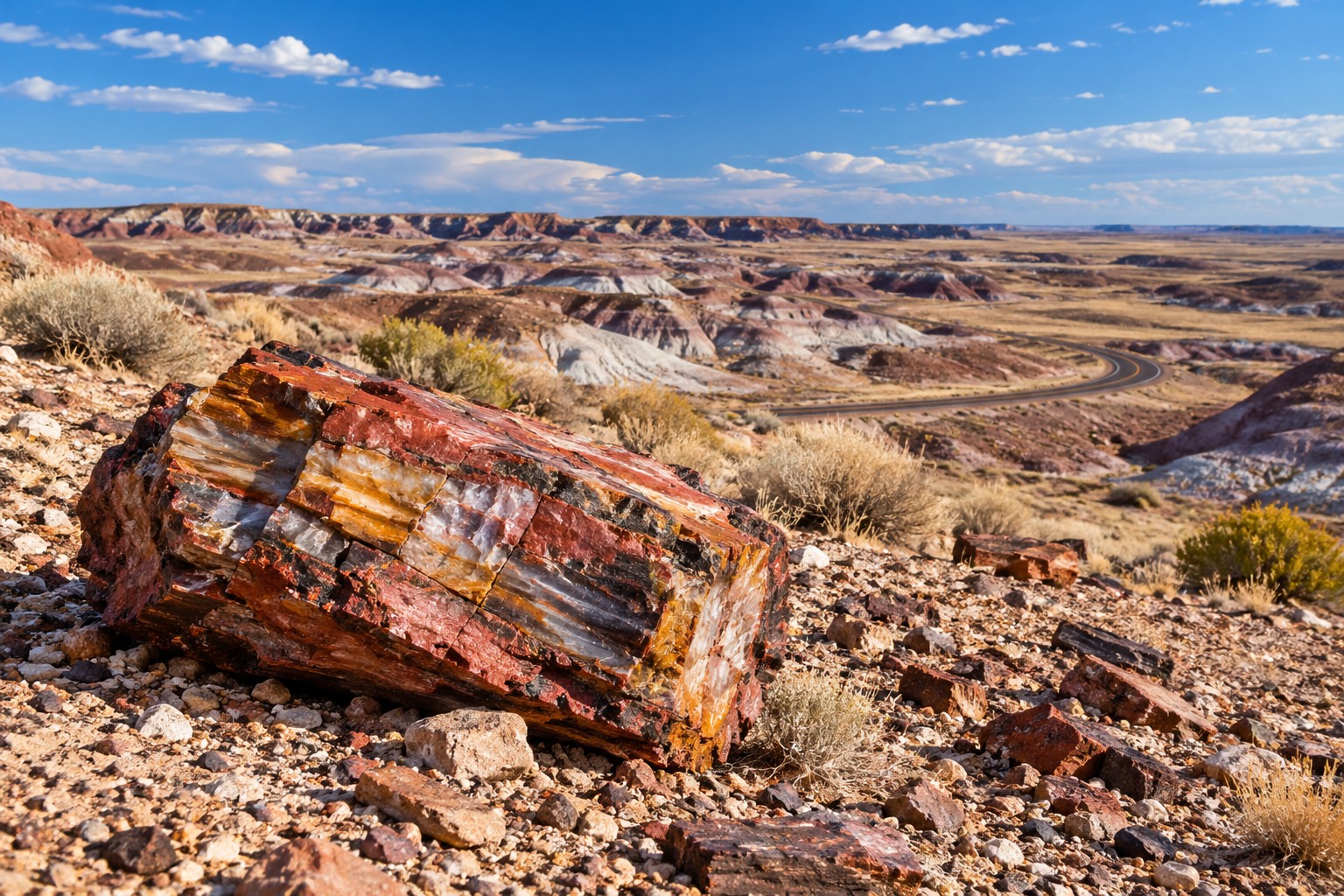
Petrified Forest rewards a slower visit than its position near Interstate 40 might suggest. Colored badlands, petrified wood, and the details beside a short trail can all disappear into the idea of a quick drive-through. For an RV traveler, a better starting point is a modest route with room to park, walk, and pause.
The National Park Service describes a 28-mile park drive and says the main road accommodates larger vehicles and trailers. Its FAQ also identifies small parking areas at Pintado Point and Agate Bridge as places large rigs and towing combinations should avoid. Those distinctions matter more than a general statement that a park is RV-friendly.
Choose an entrance and an exit deliberately
Put the park visit into the complete travel day. Decide where you will approach, where you expect to leave, and where you are sleeping afterward. Review the official map and current directions before choosing the campground on either side of the visit. A convenient line on a regional map can hide an inconvenient return drive.
Keep current gate hours and alerts beside that plan. A day-use visit needs to fit the park's operating arrangements; do not assume a national park road remains open at every hour. Check the official information again close to departure, especially when weather or road conditions may change. Save a copy of the map for use without a connection.
Give the rig an appropriate parking plan
Use the actual dimensions and configuration of your vehicle when evaluating a stop. Turning space, trailers, and a towed car all belong in the decision. Follow signs and staff guidance on the day. If a stop does not offer a comfortable approach and exit for your combination, leave it out rather than trying to improvise a turnaround.
The park FAQ says visitors may leave large rigs in a visitor-center parking lot while touring in a car or truck. Confirm the current arrangement with staff before relying on it, including which lot is suitable and when the vehicle must be moved. This can make a useful alternative to treating every overlook as a towing exercise.
Pick a few stops you want to understand
Choose one landscape stop, one opportunity to examine petrified wood, and one short walk appropriate to your group and the day's conditions. Add another stop only if the day allows it. Read the official descriptions so the choice reflects walking distance, terrain, and interests rather than a list of names to complete.
At each stop, give yourself a question: what changes in the color of the badlands, what texture can you see in the wood, or how does the view change after a short walk? Leave natural objects where they are. A visit becomes more memorable when you notice a few details closely instead of collecting hurried stops.
Keep the afternoon flexible
Bring food, water, sun protection, and clothing appropriate to the forecast, and confirm the services you intend to use. Treat conditions as a reason to shorten the plan when needed. A scenic road is still a driving task, so stop in an appropriate place before studying maps, taking photographs, or deciding what comes next.
Reserve an overnight base independently and confirm that it accepts your exact setup. Do not infer an RV campsite from the park's name or from a map's camping symbol. The day's final task should be an orderly drive to a known place to stay, rather than a late search after a full afternoon outdoors.
The point of giving Petrified Forest a day is not to fill every minute. It is to have time for the view from the road and the smaller world visible when you step away from it.
Sources and planning resources
Keep exploring
Plan seasonal trips by elevation and latitude. Download official park information before losing service.
Featured image: Original AI-generated editorial illustration created for this article. It does not document a real visit or a product test.