
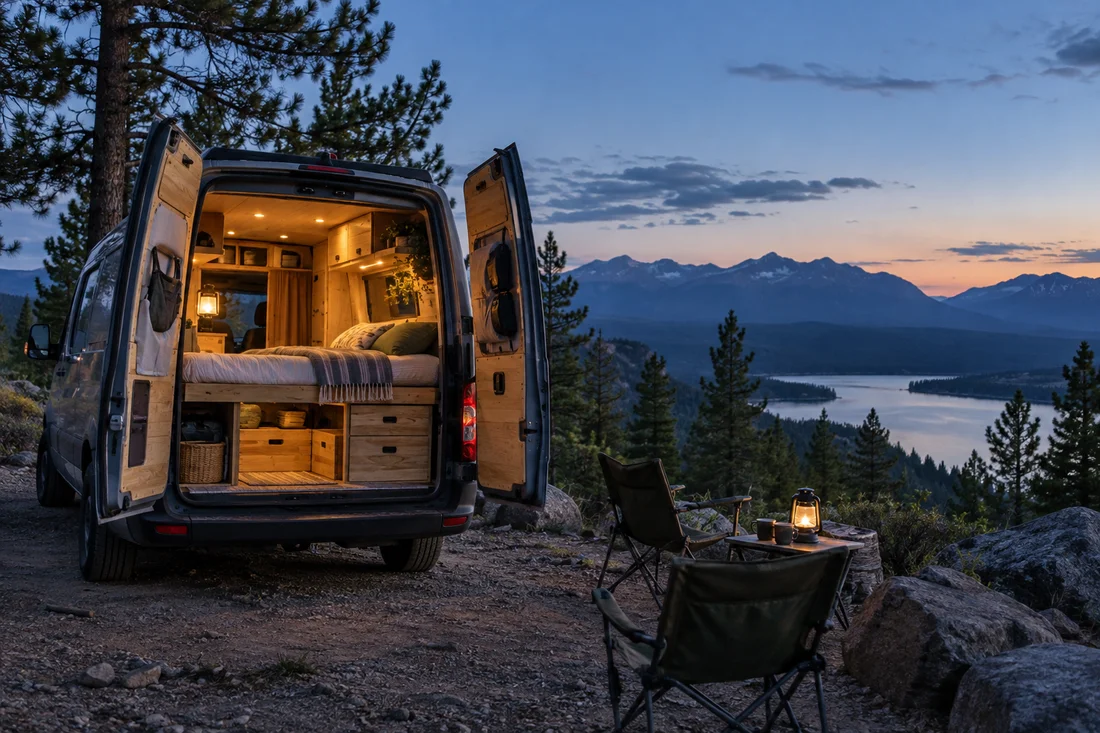
A rental van is more useful as a trial of daily life than as a test of whether you enjoy a scenic vacation. Pick a route that resembles the trips you expect to take after buying or building. Keep the schedule modest enough to notice the vehicle. The goal is to return with evidence about your routine, not simply a camera full of sunsets.
Choose the questions before the van
Write down what you need to learn: whether a fixed bed is worth the space, whether indoor seating works for both travelers, how much storage you actually use, and whether the bathroom arrangement fits your needs. Look for a rental that answers those questions. Do not generalize from one highly specialized layout to every van.
Read the rental agreement and ask for the full price calculation. Confirm permitted drivers, mileage and use limits, equipment, deposit conditions, roadside support, and the return procedure. Obtain those answers for the specific booking. We are not quoting a universal rental policy or claiming that an amenity shown in a photograph is included.
Plan a manageable first night
Choose an overnight stop with a verified site suitable for the rental’s dimensions and your desired services. The National Park Service recommends considering RV parking, electrical hookups, site layout, and park rules when selecting a campsite. Ask the operator if the individual site description leaves a relevant question unanswered. NPS campsite selection guidance.
Arrive with enough daylight and time to work through the vehicle orientation. Before leaving the rental location, ask how the doors, locks, power, water, cooking equipment, and any installed systems operate. Know whom to contact if something behaves unexpectedly. Keep the supplied instructions and booking details available without depending on a mobile signal.
Live through the transitions
Prepare an ordinary meal, wash up, change clothes, and set up the bed. Note whether one task prevents another person from using the space. Try reaching the items needed at night. Keep a short list of observations, using plain descriptions such as “the coats covered the seat” rather than immediately deciding that an entire vehicle category is wrong.
Include the travelers who will share the van whenever practical, and account for their sleep, privacy, and access needs. If a pet is part of the plan, verify the rental’s permission and the campground’s rules. NPS pet guidance is a useful preparation resource, while the destination’s actual policy remains the authority. Camping with pets.
Turn the trial into a buying brief
After returning, divide the notes into essentials, useful conveniences, and features you barely used. Record the dimensions or arrangement behind each observation. Your next rental or purchase visit can then test a specific improvement instead of starting from another appealing photograph.
A rental cannot establish long-term durability or maintenance cost, and one weekend cannot reproduce every season. It can still show whether daily conversions, limited storage, and compact living suit your actual habits. Pair the observations with our layout worksheet and our budget framework. Buy only after the enjoyable parts and the ordinary work both make sense.