
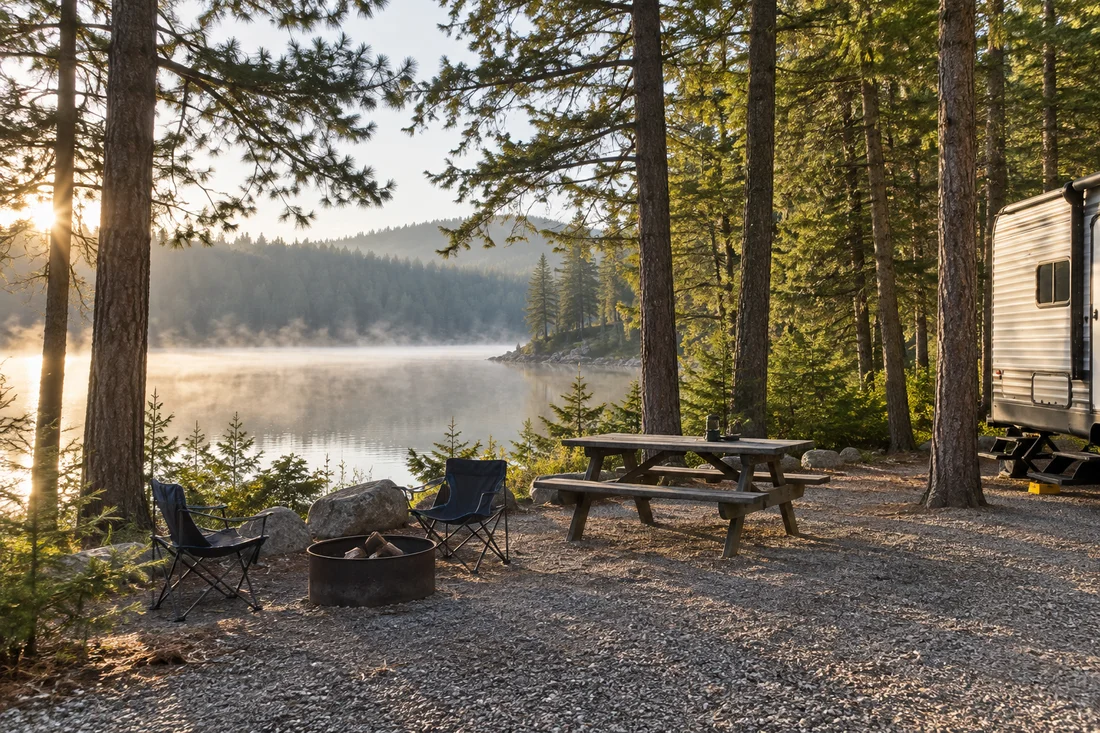
A campsite cleanup routine is different from securing the RV for travel. It asks what remains in the space after you leave: crumbs, packaging, small belongings, disturbed furniture, or an unresolved facility problem. Give the site a separate final check once the main equipment is packed. The next traveler should find the place ready for their own stay.
Start with the location’s rules
Read the instructions for waste, recycling, food storage, fires, washing, and campsite boundaries. Use designated facilities and disposal routes as instructed. Do not assume a practice permitted at one campground is appropriate everywhere, especially for wastewater or food-related waste.
NPS Leave No Trace guidance explains that buried or partly burned garbage can still attract animals and make a site unattractive. Use the official destination instructions for the actual cleanup and disposal requirements. A fire ring is not a substitute for the waste system. NPS minimum-impact guidance.
Pack the small things deliberately
Keep a final bag or container for loose items that appear during cleanup. Check beneath seating and the picnic table, around the vehicle, and the areas where food was prepared. Account for straps, pegs, toys, packaging, and the small accessories that are easier to overlook than a chair.
Keep useful supplies accessible until the site check is finished. A cleanup routine is more likely to be completed when the appropriate bag, brush, or other permitted equipment has not already been buried in a storage compartment. Follow safe handling instructions and seek staff assistance for hazardous or unfamiliar items.
Respect the site’s arrangement
Return movable items as the operator requires and leave permanent features undisturbed. Do not create a new parking pad, shortcut, or clearing because it would make the next visit easier for your rig. Keep vehicle and equipment movement within the permitted areas.
If something is damaged or not working, report it through the operator’s process with the site identification and a factual description. Do not attempt an unauthorized repair or conceal the issue by moving equipment. A clear report can help staff address the condition before the next arrival.
Check the places used briefly
Include the areas used only once during the stay, such as a spot where a bag was unpacked or a child played. Small objects may remain there even when the main seating area looks clear. Keep the check within the permitted site and use appropriate care around unfamiliar or hazardous items. Ask staff for help rather than handling something unsafe. A deliberate scan should account for your own activity without disturbing plants, wildlife, other campers, or permanent site features in an attempt to make the ground look artificially perfect.
Separate cleanup from departure checks
Once the site is ready, finish the vehicle’s own travel checks using the correct manuals. If the group shares work, make the handoff clear so a person does not assume the other has checked both the RV and the ground. Interruptions are a reason to restart from a known point, not to guess.
Use our vehicle departure framework alongside the campground courtesy guide. Before leaving, look at the site once more from outside the vehicle. A separate sweep takes a simple question seriously: have you removed your belongings and waste while respecting the place that hosted the stay?