














As the calendar turns toward November, the nature of RV travel changes. The days are growing shorter, temperatures are dropping, and the weather can shift rapidly. This is the ideal time to audit your safety preparations. While many RVers focus on winterizing their plumbing, it is equally critical to ensure your emergency supplies are ready for the conditions you will face on the road during the final months of the year.
The Foundation: Building Your RV Emergency Kit
An emergency kit is not a static collection of items; it should be a functional, accessible resource that you can rely on if you are stranded or face a mechanical issue. According to Ready.gov, the goal is to be prepared to survive on your own for several days. For an RV, this means your kit needs to be portable and organized.
Start by gathering your supplies into airtight plastic bags and storing them in one or two easy-to-carry containers, such as a sturdy duffel bag or a plastic bin. This ensures that if you need to evacuate or move your gear quickly, you aren’t searching through cabinets. Your basic kit should include:
- Water: Aim for one gallon per person per day, intended for both drinking and sanitation.
- Food: A several-day supply of non-perishable items. Think protein bars, canned meats, dried fruit, and dry cereal.
- Communication and Light: A battery-powered or hand-crank radio, a NOAA Weather Radio with tone alert, and a reliable flashlight.
- Safety and Tools: A first-aid kit, a whistle to signal for help, a dust mask, and a wrench or pliers to turn off utilities if necessary.
- Navigation: Keep local maps on hand. Never rely solely on digital systems that may fail without a signal.
- Sanitation: Moist towelettes, garbage bags, and plastic ties.
As you assemble these items, remember to include a manual can opener. It is a small, often overlooked item that becomes essential when you are relying on canned goods.
Adapting Your Kit for RV-Specific Risks
While a standard emergency kit covers the basics, RV travel introduces specific variables. Your vehicle is both your transportation and your shelter, which changes how you should approach safety. Information from Ready.gov regarding car safety provides excellent context for RVers, particularly as road conditions deteriorate in late autumn.
In addition to your basic kit, your RV-specific emergency collection should include:
- Vehicle Essentials: Jumper cables, flares or reflective triangles, and an ice scraper.
- Traction Aids: Cat litter or sand can provide necessary traction if you are stuck in a slippery campground or roadside shoulder.
- Fire Safety: Ensure your fire extinguisher is accessible and that you know how to use it.
- Climate Management: Pack a sleeping bag or warm blanket for every passenger, along with a complete change of clothing appropriate for the climate.
Integrating these items into your routine is as important as owning them. Before you head out, your safety plan should be part of your broader trip preparation. We have previously discussed how to Make a Departure Checklist You Will Actually Use, which can help ensure these emergency items are packed and accessible before you leave the driveway. Furthermore, because navigation can be a distraction or a failure point, always Give Navigation a Passenger Job Before the RV Moves to keep the driver focused on the road, especially in challenging weather.
Remember the specific driving advice for adverse conditions: disable your vehicle’s cruise control when driving on slippery, icy, or snowy roads. Cruise control can cause your wheels to spin faster if you lose traction, potentially leading to a loss of control. Additionally, be cautious of flooded roads; six inches of water can cause a vehicle to lose control or stall, and a foot of water can float many vehicles.
Maintaining and Storing Your Kit
Once you have built your kit, the work isn’t finished. Maintenance is the difference between a kit that works and one that fails when you need it most. Review your supplies at least once a year. Check expiration dates on food and water, and test your batteries. If you use a refrigerator thermometer, remember that refrigerated food should be kept at 40 degrees Fahrenheit or below. If the power goes out, the refrigerator will keep food cold for about four hours if the door remains unopened.
Storage locations matter. You do not know where you will be when an emergency occurs, so ensure your kit is in a designated, accessible place. In your RV, this might be a specific cabinet near the door or a storage bay that is easily reached from the outside. If you are storing food, keep canned items in a cool, dry place and boxed food in tightly closed plastic or metal containers to prevent moisture damage.
Finally, document your plan. Include important family documents, such as copies of insurance policies and identification, stored electronically or in a waterproof, portable container. By taking the time to organize these materials now, you ensure that your late-season travels remain safe, regardless of what the weather brings.
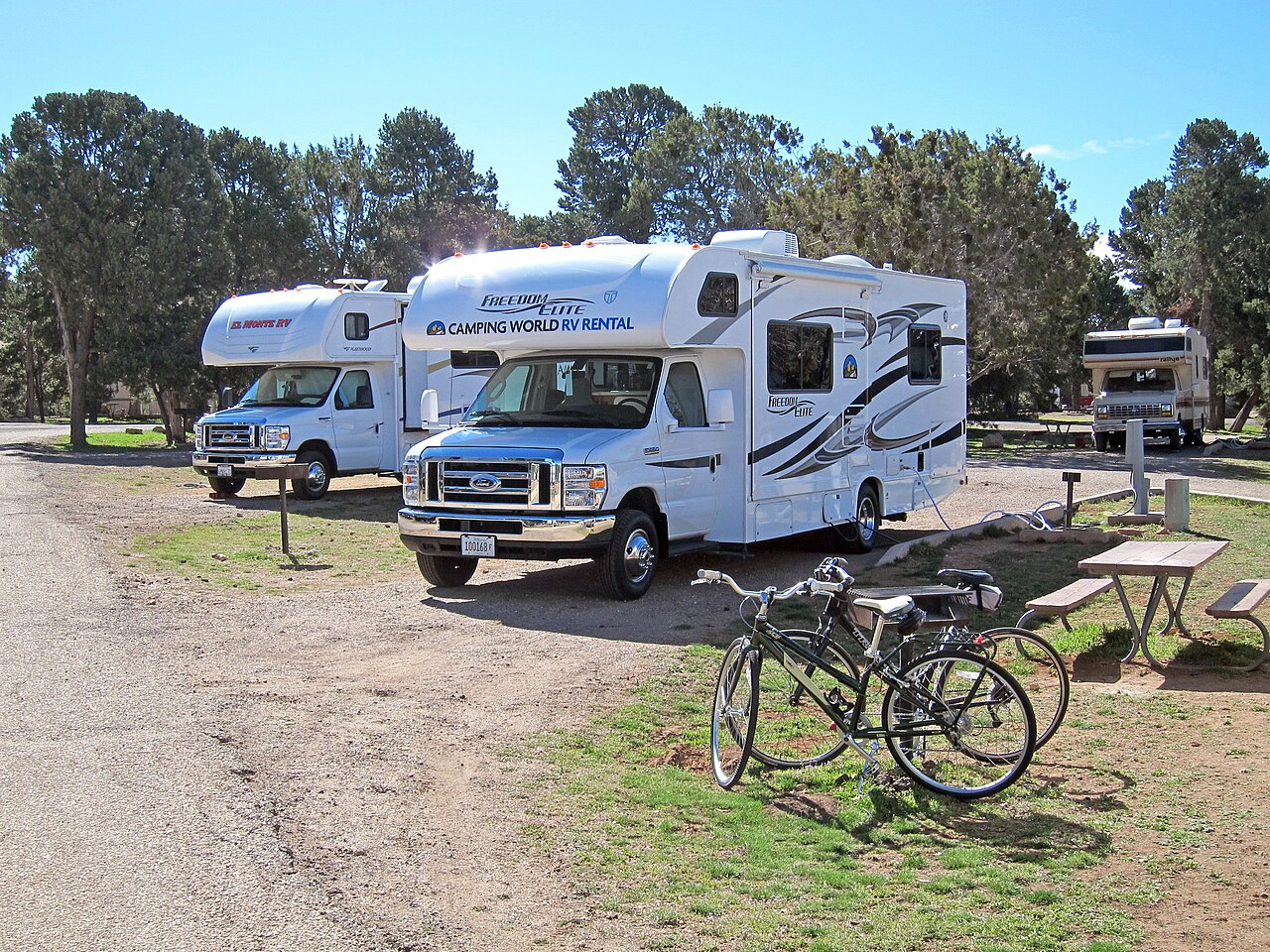
Representative photo. RV travel in late autumn requires careful preparation and emergency planning, as conditions can change rapidly in campground settings. Photo: Grand Canyon National Park / Wikimedia Commons · CC BY 2.0. Resized for display. Sources checked October 23, 2026.