














As the travel season shifts, the reality of shorter days and cooler temperatures becomes a primary factor in RV trip planning. For many, this transition period is the ideal time to audit the gear stored in cargo bays and interior cabinets. While most owners focus on winterizing plumbing systems or checking tire pressure, an equally critical task is updating your emergency preparedness kit. A well-stocked kit is the difference between a minor inconvenience and a significant safety issue when you are miles from the nearest service station.
According to the guidance provided by Ready.gov, a basic disaster supplies kit should be a collection of items your household needs to survive on its own for several days. In the context of RV travel, this means moving beyond the standard “roadside kit”—which usually includes basic tools and flares—to a more robust collection of supplies that account for power outages, isolation, and environmental shifts.
The Foundation of an RV Emergency Kit
Building a reliable kit starts with the essentials. Per the checklist at Ready.gov, every kit should include non-perishable food, water (at least one gallon per person per day), a manual can opener, a battery-powered or hand-crank radio, and a flashlight. However, modern RV travel demands a more sophisticated approach to power management. Relying solely on the RV’s house batteries or the engine battery can be risky if those systems fail or if you are parked without hookups for an extended period.
When reviewing the types of accessories to add to your kit, prioritize versatility. A portable power station serves as a bridge between your primary electrical system and your emergency needs. As discussed in our guide, Portable Power or a Built-In Battery System? Start With Your Camping Routine, the choice of power source should match your specific usage habits. For an emergency kit, the goal is not to power an entire campsite, but to ensure that critical communication devices, lighting, and medical equipment remain functional when the main power grid is unavailable.
Selecting Portable Power Accessories
When shopping for power-related emergency accessories, the focus should be on reliability and ease of use rather than maximum capacity. Look for units that offer multiple charging inputs—such as solar, 12-volt DC, and 120-volt AC—to ensure you can replenish the power regardless of your location. A portable power station is only as useful as its ability to be recharged when you are off-grid.
In addition to the power station, consider the following accessories to round out your emergency power setup:
- High-Quality Charging Cables: Ensure you have dedicated, durable cables that remain with your emergency kit. Do not rely on the cables you use daily, as they are prone to wear and tear.
- Portable Solar Panels: If you are planning to spend time in remote areas, a compact, foldable solar panel can provide a critical trickle charge to your power station during daylight hours.
- Lighting Solutions: LED lanterns that are rechargeable via USB are far more efficient and safer than traditional propane or kerosene lanterns, which require ventilation and fuel storage.
Vehicle Readiness and Safety
It is also vital to keep your vehicle itself ready. As noted on Ready.gov, your vehicle’s condition is a major part of your emergency plan. Before heading out, have a mechanic check the battery and ignition system, as these are the first systems to experience issues when temperatures drop. Additionally, ensure you have an ice scraper, jumper cables, and a blanket in your vehicle. Keep your gas tank full in case of evacuation or power outages; a full tank also helps keep the fuel line from freezing.
Remember that if you are driving in bad weather, you should only do so if absolutely necessary. If the emergency could affect the stability of the roadway, avoid overpasses, bridges, and power lines. If a power line falls on your car, stay inside until a trained person removes the wire.
Integrating Power Into Your Safety Routine
Once you have acquired the necessary power accessories, the next step is maintenance and storage. A power station left in a hot or freezing cargo bay for months may lose its charge or, worse, suffer damage to the internal battery chemistry. We explored the nuances of this in Give a Portable Power Station a Safe Charging Space, which highlights the importance of keeping these devices in a temperature-controlled environment.
Use the following checklist to ensure your power-related emergency kit is ready for the road:
| Item | Purpose | Maintenance Check |
|---|---|---|
| Portable Power Station | Back-up power for devices/lights | Charge every 3-6 months |
| USB Charging Cables | Connection for phones/radios | Inspect for fraying |
| Portable Solar Panel | Recharging power station | Clean surfaces; test output |
| Battery-Powered Radio | Emergency alerts | Replace batteries annually |
| Flashlight/Headlamp | Task lighting | Check switch and bulb |
Finally, remember that an emergency kit is a living collection. Every time you return from a trip, take a moment to inspect your supplies. If you used a battery or consumed a ration, replace it immediately. By treating your emergency kit with the same care as your RV’s mechanical systems, you ensure that you are prepared for whatever the road—and the weather—brings.
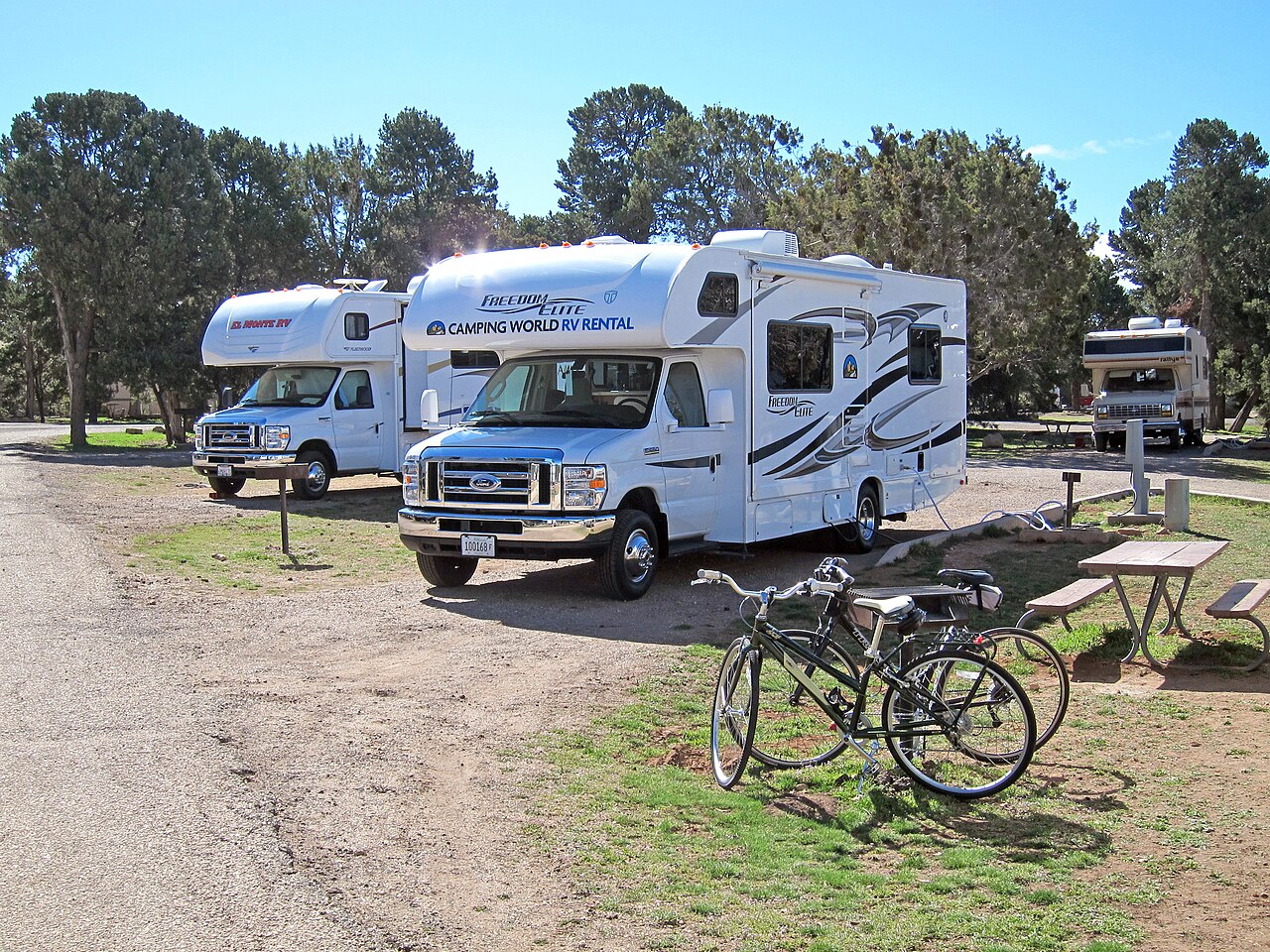
Representative photo showing RVs parked in a campground, highlighting the importance of maintaining your vehicle and emergency power systems for off-season travel. Photo: Grand Canyon National Park / Wikimedia Commons · CC BY 2.0. Resized for display. Sources checked October 23, 2026.