
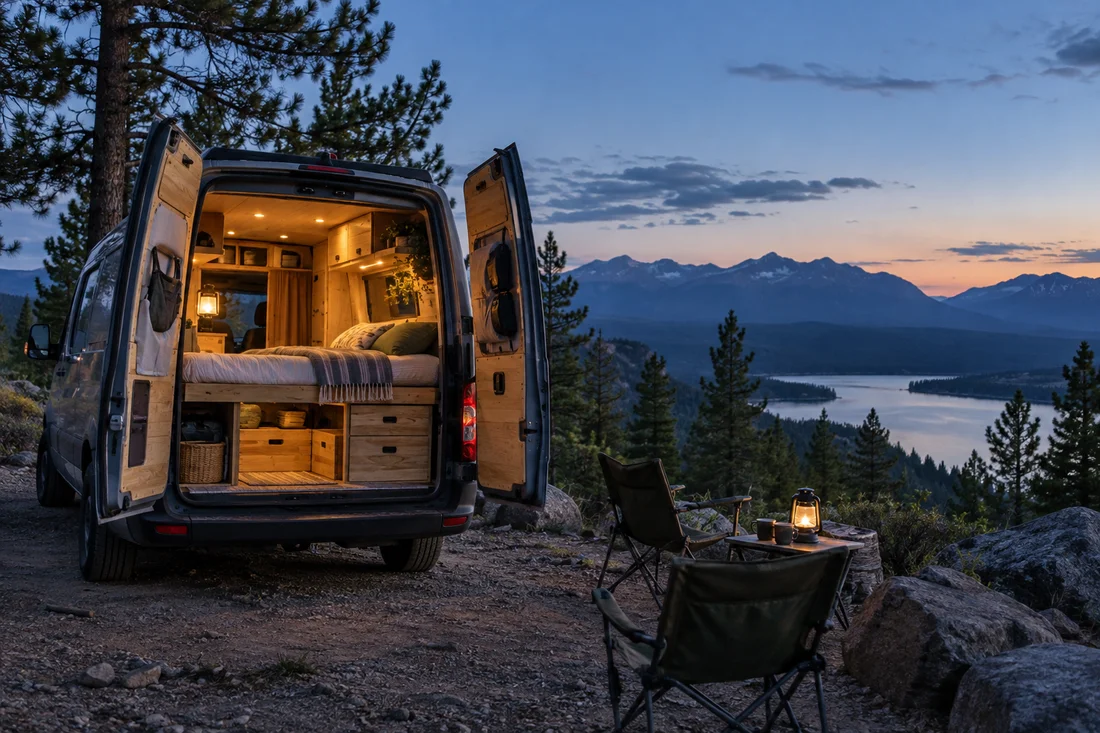
A rainy day is a useful test of a camper van. Can everyone sit comfortably with the doors closed? Is there a place for wet shoes? Can you prepare the meal you planned without moving every bag? These are design and trip-planning questions, not evidence that the trip has gone wrong. Build a routine for less convenient weather before it arrives.
Rehearse a day indoors
Set the interior up as you would use it at camp. Put bags, bedding, and a realistic amount of food in their normal places. Then spend a while reading, working, or playing a game without relying on open doors or outdoor furniture. A short rehearsal makes it easier to spot where two people compete for the same surface.
Choose a flexible indoor activity plan for the destination: a visitor center, local library, museum, or another place that actually fits your route and interests. Confirm opening times and parking before departure. These are optional ways to enjoy a wet day, not substitutes for a suitable overnight arrangement.
Manage the return from outside
Give wet outer layers and footwear a defined landing spot. Keep an absorbent towel available and choose containers you can clean and dry. Avoid draping belongings over controls, vents, or electrical equipment. The aim is to prevent a brief walk from turning the whole sleeping area into a drying rack.
Review the ventilation equipment’s actual operation and weather limitations. Manufacturer fan features differ by model, so understand what your installation permits before leaving it running or opening a lid in rain. Keep the instructions available. If the van still needs its roof plan, see our ventilation planning guide. Example manufacturer feature information.
Simplify meals without improvising equipment
Pack a few meals that require little preparation and minimal cleanup. Think about the complete task, including water, utensils, food storage, and waste. A crowded galley is often more manageable when the meal itself is simpler rather than when another appliance is added to the counter.
Use cooking equipment only in the environment its manufacturer approves. An outdoor stove or grill does not become an indoor appliance because the weather is unpleasant. CPSC’s carbon monoxide information explains the danger of fuel-burning equipment. Plan the indoor meal around equipment actually approved and properly installed for that use. Official carbon monoxide guidance.
Leave space in the itinerary
Check the destination’s official conditions before travel and again as needed. A saved guide is not a live warning service. If weather changes the suitability of a campsite or access road, use an appropriate alternative rather than forcing the original plan. Keep enough schedule and budget flexibility to stay elsewhere when necessary.
After a wet weekend, write down what was awkward: a missing hook, an inaccessible towel, a meal that required too much washing. Fix those specific problems before replacing the entire layout. Our storage guide helps translate those observations into changes. A van that works during an ordinary rainy afternoon gives you more freedom to appreciate the brighter mornings when they return.