
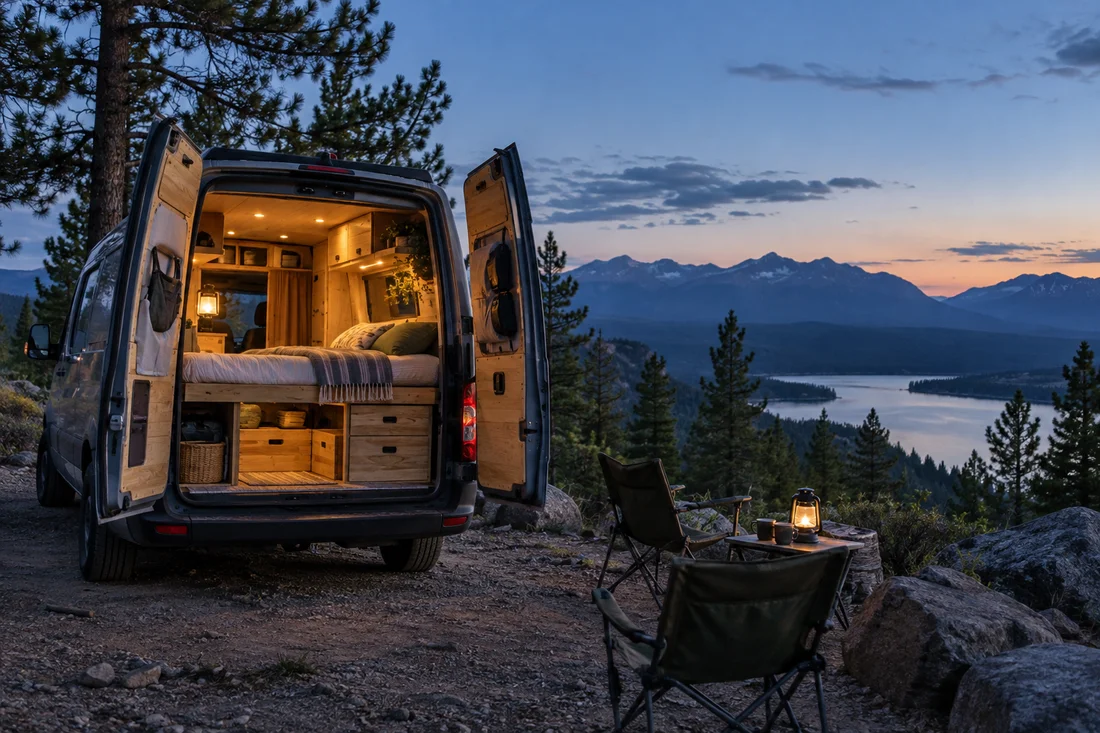
A roof box looks like a straightforward answer to a crowded van: move bulky equipment outside and reclaim the living area. Before choosing one, consider the complete arrangement, including the vehicle roof, rack, box, access method, and the things you plan to carry. Extra volume is useful only if the system suits the vehicle and the loading routine remains manageable. This guide provides a comparison process; it does not rate a particular box.
Measure the whole installation
Use the vehicle and rack manufacturers’ documentation to identify the permitted setup and load limits. Include the rack and empty box in the calculation rather than treating the box’s advertised capacity as the vehicle’s allowance. Thule’s packing guidance distinguishes the vehicle, rack, and box limits. Ask the supplier to document how the exact combination satisfies all applicable instructions before you commit.
Record the installed overall height and the clearances needed for doors, hatches, roof equipment, and maintenance access. Thule’s fit guidance uses a hatch-clearance measurement and a model-specific chart; its procedure is an example to follow for the relevant product, not a universal dimension for every van. Consider roof vents, antennas, and solar equipment in the same drawing. A box that occupies available space may still obstruct something you need.
Pack for the item you retrieve first
Write a proposed contents list before comparing liters of capacity. Separate bulky light items from dense equipment and check every item against the mounting system’s requirements. Think about what comes out during a short roadside stop, what stays packed until camp, and what might be wet when you leave. A useful packing plan prevents the interior from becoming a temporary dumping ground each time the roof box opens.
Try the loading motion in a showroom with permission. Can the intended user reach the opening, secure the contents, and operate the lock from an appropriate access position? Ask how the design works when parked in a tight space. Do not assume that a taller box or a two-sided opening solves every access problem. The vehicle’s shape and your physical reach remain part of the decision.
Include the campsite routine
Make room for an arrival check and the manufacturer’s travel inspections in your existing checklist. Decide where keys and the instructions live. Have every regular traveler practice opening and closing the box while stationary, and confirm how you recognize a properly secured closure. A product that requires an awkward ritual deserves more scrutiny than one whose capacity figure looks impressive on paper.
Ask about replacement parts, mounting hardware, weather-related instructions, and long-term care. Price any required adapters and the complete rack arrangement with the box. If the proposed system conflicts with roof ventilation or leaves no service access, compare a different storage strategy before buying. Removing a few rarely used items may sometimes solve the same problem with less complexity.
Compare a complete solution
Our criteria are verified fit, usable access, clear documentation, service support, and the space recovered inside. We have not measured noise, fuel consumption, durability, or water resistance. Read our van storage guide before deciding what belongs outside, then update your departure checklist for the installed equipment. Preserve the actual instructions instead of relying on a generic roof-box checklist.
At a glance
Editorial rating: Unscored - no completed test assessment