
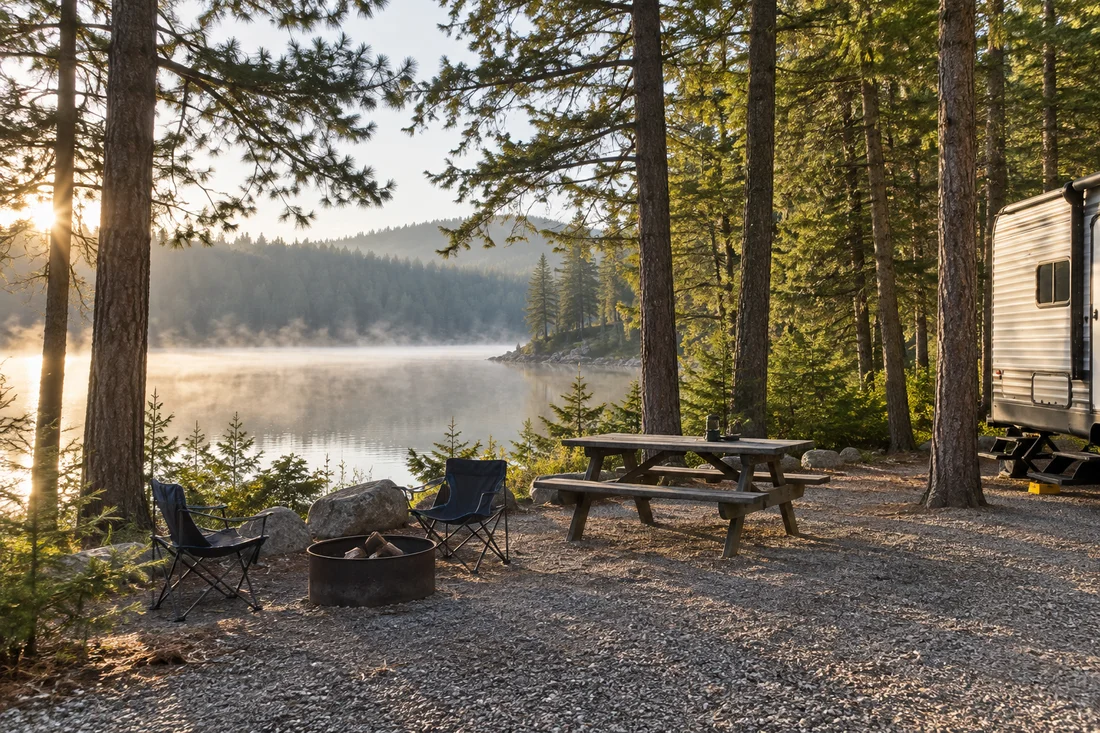
The first half hour at a campground sets the tone for the stay. A clear arrival routine helps you confirm the site, understand the rules, and work through the vehicle’s setup without being pulled immediately into dinner, sightseeing, and unpacking. Build the routine around the actual RV and campground, with enough time to ask for help when something is different from the reservation.
Prepare before reaching the gate
Keep the confirmation, site number, arrival instructions, and vehicle dimensions accessible offline. Check the operator’s current check-in procedure and what happens if you arrive after office hours. Do not assume a gate will be open or that a host will be available simply because a campsite is reserved.
Review the rules you accepted, including occupancy, pets, quiet hours, equipment use, and checkout. Recreation.gov explains that facility-specific policies can supersede its general rules. Save the information associated with your actual dates and location, not an older screenshot from a previous trip. Reservation policy guidance.
Confirm the site before unpacking
Check that you have reached the correct space and understand its boundaries. Look at the approach, surface, available room, and the services associated with the site. If an essential detail does not match the booking or remains unclear, speak with the operator before beginning a setup that may need to be reversed.
The National Park Service notes that campsite choice includes RV parking configuration, space for slide-outs, and service requirements. Those are practical reasons to inspect the actual site rather than rely only on its number. Follow posted restrictions and staff directions when determining where the vehicle and equipment belong. NPS campsite guidance.
Use the correct setup sequence
Follow the manuals for the vehicle, towing equipment, support systems, and service connections. Assign tasks clearly if several people help, and avoid giving different people overlapping responsibility for a step they cannot see completed. If interrupted, return to a known point rather than guessing.
Keep children and pets appropriately supervised and away from vehicle movement and setup tasks. Save the unpacking of chairs, cooking equipment, and leisure items until the essential setup is complete. A small delay in opening the outdoor kitchen is preferable to having luggage and people obstruct the work.
Establish the everyday plan
Find the relevant facilities, review food and waste-storage rules, and identify the help process. Know what is available at the site versus elsewhere in the campground. A general amenity list may not explain operating hours, seasonal availability, or which areas are accessible to your group.
Before the first evening ends, put the departure time and next travel requirements where everyone can see them. Use our campsite-fit guide for reservation research and our departure framework for the other end of the stay. An arrival routine succeeds when it leaves the group settled, informed, and ready to enjoy camp without unresolved questions about the basic arrangement.
Agree on a simple pause rule: if someone cannot see what is happening, does not understand a step, or notices a possible problem, stop the relevant task and resolve the question. A shared understanding is more useful than trying to make setup look effortless.