
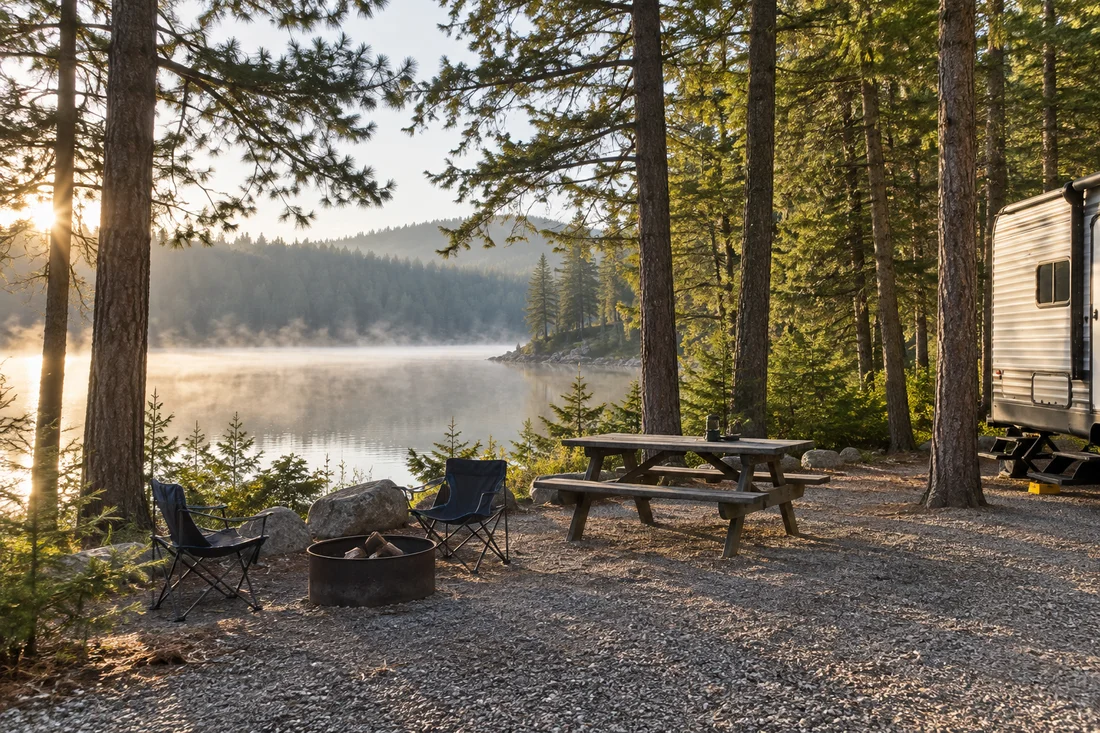
The most useful campsite light may be the one you can aim carefully and switch off without leaving your chair. Before buying a brighter lantern or another string of decorative lamps, describe the tasks that need illumination. Your campsite is also someone else’s evening view. This guide compares the way a lighting kit serves a routine; it does not report measured brightness, battery runtime, or weather resistance for a product.
Make a small light map
Walk through an imaginary evening: arriving, preparing food in an appropriate place, finding a stored item, reading, and settling down. Mark where light is necessary and whether it needs to move with the person. Separate a short task from a light that remains on for hours. That exercise can show whether one adjustable lamp and a personal light solve more problems than a large permanent display.
NPS outdoor-lighting principles emphasize limiting unnecessary artificial light, and its campground-etiquette guidance asks visitors to consider neighboring campers. Use those ideas as a buying brief. Look for controllable output and direction, then check the local rules for the actual campground. A campsite’s surroundings may call for a different arrangement from the one that looked attractive in a product photograph.
Try the controls
Ask to operate the light in a showroom or study the exact manual. Can you reach a low setting directly, or must the lamp cycle through bright modes first? Is the switch easy to recognize in darkness? If several people share the kit, consider whether everyone can use it without instructions. A feature list rarely explains how annoying an unfamiliar control can become late at night.
Check mounting options and the places where the manufacturer permits use. Consider stability, cables, hot surfaces where relevant, charging, and moisture restrictions. Do not attach a light to a structure merely because a clip fits. Keep walkways clear and preserve the vehicle’s normal entry and exit paths. Ask whether batteries, chargers, mounts, and other necessary accessories are actually supplied with the product.
Budget energy and storage
Compare runtime claims only alongside their stated output level and test conditions. A maximum runtime and a maximum brightness may describe different modes. For a rechargeable kit, record the charging method and where it will be charged and stored according to its instructions. Add the load to your travel-power notes if it matters to your routine, rather than treating every small device as irrelevant.
Give each light a simple job and a consistent storage location. Keep a readily accessible backup that suits your needs instead of scattering unidentified lamps throughout the van. Check ordinary operation before leaving home and follow the manufacturer’s maintenance directions. If a lamp requires an app or unusual cable, consider what happens when the phone or cable is unavailable. Convenience includes a workable failure plan.
Buy control before spectacle
Our criteria are adjustable output, useful direction, simple controls, appropriate mounting, and a manageable power routine. Runtime, durability, and light quality remain unscored without testing. Use our arrival routine to identify suitable positions before darkness, and include charging needs in your energy plan. A good kit helps you see what you are doing while letting the rest of camp enjoy the night.
At a glance
Editorial rating: Unscored - no completed test assessment