












Congaree offers an appealing change of pace for a road trip: tall trees, close observation, and a walk that can become the center of the day. The essential RV planning detail comes before choosing a trail. The national park does not offer RV or trailer campsites. Its developed campgrounds are for tents and hammocks, so your overnight base needs its own research.
Start by finding an outside campground that accepts your vehicle and meets your service needs. Confirm the actual reservation, route, and current operating information. Then plan the park visit from that base. Keeping these two decisions separate makes it easier to enjoy the forest without confusing a day-use destination with an overnight RV facility.
Begin with the current route, not an old photograph
The National Park Service lists the Boardwalk Trail as approximately 2.6 miles round trip. That figure describes a route, not a promise that every section will be available on your travel date. Congaree's trail information warns that flooding can affect routes and that the page may not update with every flood. Check park alerts before every visit.
The park has also published boardwalk construction information describing changing closures and detours. A projected completion date is not proof of the route you will find. Read the current alerts and ask staff about the available walk, especially if surface conditions, distance, or accessibility are important to someone in your group.
Treat the floodplain as part of the place
This is a landscape shaped by water. A familiar-looking path may have different conditions on another day. Stay on open, designated routes, respect closures, and turn back when the available route does not suit your party. Do not assume a raised section means the entire walk is unaffected by high water.
Choose the outing for the person who needs the most consideration, and leave room for stops. A walk focused on trees, leaves, and the changing light can be satisfying without adding a long backcountry extension. Check the official trail descriptions before making a combination that appears simple on a small map.
Give your vehicle a confirmed daytime place
Review current parking and access information for your exact rig or towing arrangement. Space that works for a passenger car may be unsuitable for a long combination, particularly when busy. Contact the park if you need clarity about oversized parking or a particular arrival time. Keep the plan within the permitted daytime arrangements.
Do not treat permission to park as permission to sleep in the vehicle. The park's camping guidance specifically distinguishes its tent-camping arrangements from RV accommodation. If you are traveling in a campervan, verify your overnight option just as carefully as a motorhome owner would. A small vehicle does not make a camping restriction disappear.
Bring an observation plan
Take water, suitable footwear, weather-appropriate layers, and the items your party needs for the actual outing. Protect your map or phone from the conditions, and have a practical return plan. Insect conditions and weather can affect comfort; consult the park's current visitor information rather than assuming a photograph represents every season.
Pick one thing to look for along the way, such as changes in bark, the shapes of roots, or the contrast between higher and lower ground. Keep a few notes without collecting plants or disturbing wildlife. Back at your separate RV base, the trip can continue with an ordinary meal and a quiet evening instead of another ambitious drive.
Congaree is well suited to a visit that leaves space for attention. A confirmed overnight base and a current trail plan give you room to notice what makes this forest different.
Sources and planning resources
- NPS: Congaree camping and RV information
- NPS: Congaree trail information
- NPS: Boardwalk construction updates
Keep exploring
Plan the day hike separately from camp. Prepare official park information for offline use.
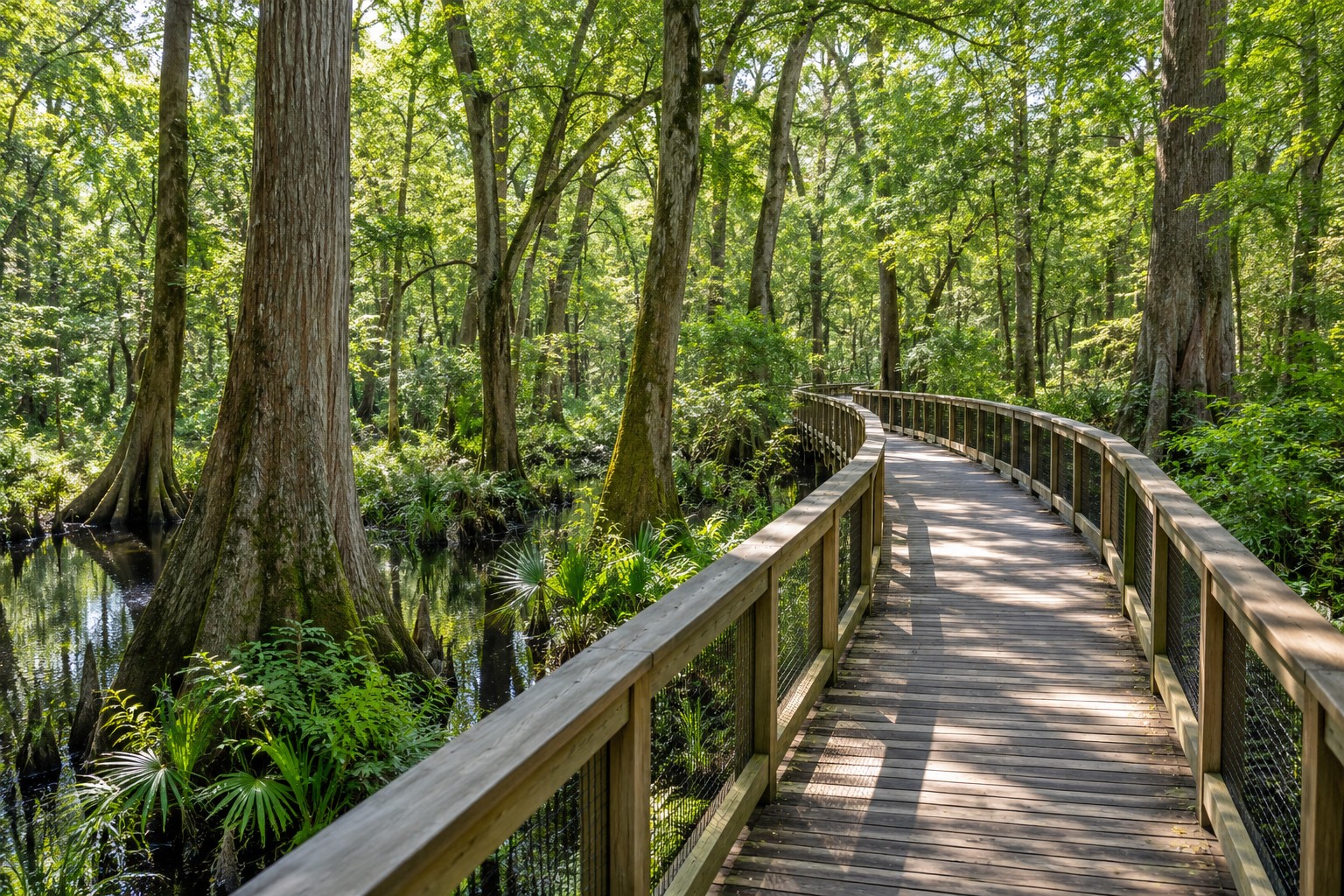
Featured image: Original AI-generated editorial illustration created for this article. It does not document a real visit or a product test.