
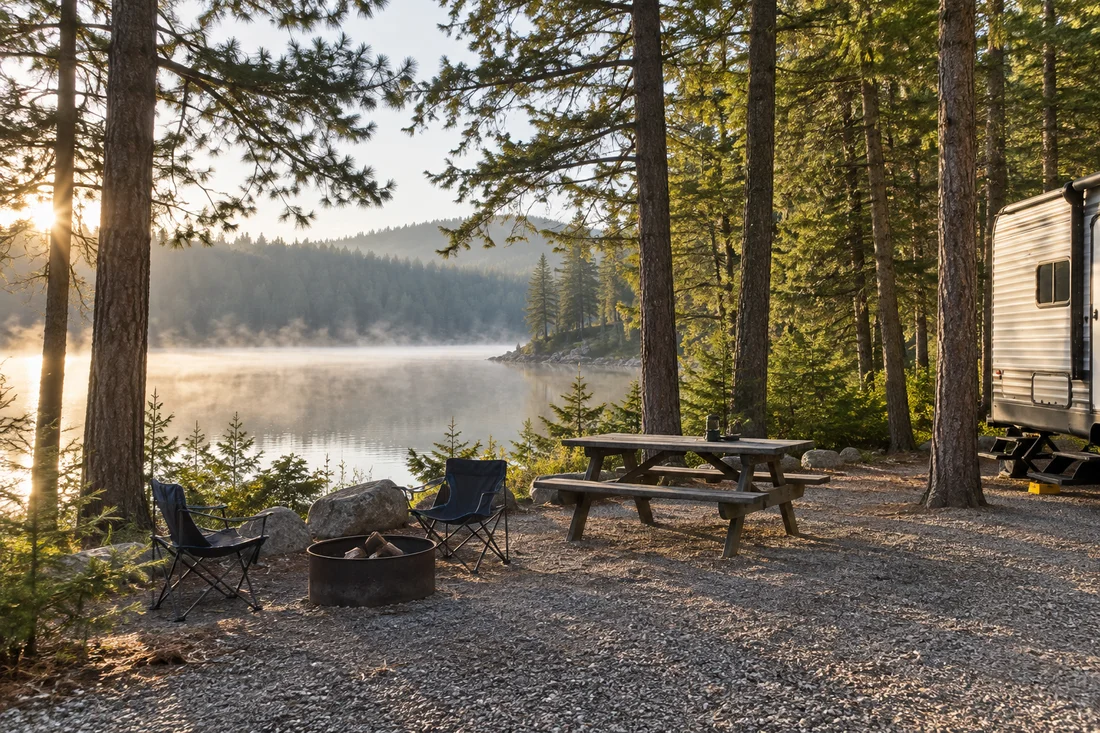
Olympic is an invitation to choose a pace. A coast visit, time beside Lake Crescent, and a forest walk can all belong in one journey, but they do not need to happen on the same driving day. Plan around a few overnight bases and the activities that matter most to your group. The campground decision should shape the itinerary before a long list of stops takes over.
Group the trip by landscape
Consider a lake-focused stay, a coast-focused stay, and a forest outing as separate planning blocks. For each block, identify one main experience and an optional alternative. That keeps a change of weather or a parking constraint from undoing the whole day. Use the park’s current conditions information as a planning source immediately before travel. Olympic conditions and access information.
Do not assume every park road is suitable for your rig. NPS specifically identifies vehicle limitations on certain campground approaches, and Deer Park is not RV accessible. Check the actual road and destination rather than treating the park name as a single uniform driving environment. A shorter vehicle still needs the same careful route research.
Match the campground to the vehicle
The official camping page provides individual information for places including Fairholme, Kalaloch, Mora, and Hoh Rain Forest. Site lengths, operating seasons, reservation arrangements, and services vary. Use each campground’s current description and the selected campsite’s booking details. A campground-wide maximum is not a guarantee that your chosen site can take the same vehicle. Official Olympic camping information.
If you need a particular electrical service, confirm it directly rather than inferring it from the presence of RV sites. Plan water, waste, and recharging around actual facilities. When the published information leaves a critical feature unclear, contact the campground or choose an alternative whose suitability you can establish.
Plan the coast with the tides
NPS identifies tide timing as central to tidepool visits and provides guidance and a tide-chart resource. Read the current instructions for the beach you choose, including access and safety information. Do not schedule a coastal walk solely around the time you expect to arrive after a long drive. Olympic tidepool planning.
Keep the coastal day simple: suitable parking, a realistic walk, food, and enough time to return without rushing. A tidepool visit does not need to become a long coastal traverse. Select an experience that matches the mobility, attention, and energy of the people traveling, and follow current ranger guidance on hazards and closures.
Leave room for a different day
Use a flexible block for resupply, laundry, or an extra night in a place you want to explore more deeply. Check reservation changes and cancellation rules before moving plans. A distant fallback campground can alter the day substantially, so keep alternatives in the same planning area whenever possible.
Save the official campground and road information offline, then refresh it when a connection is available. This guide offers an itinerary method rather than live road conditions or guaranteed access. Our campsite-fit guide helps resolve the rig details, and the budget guide helps compare the cost of more driving with the value of staying put.
For nights where the selected site does not provide the services your appliances need, use our power-planning comparison to identify the questions to resolve before departure.