
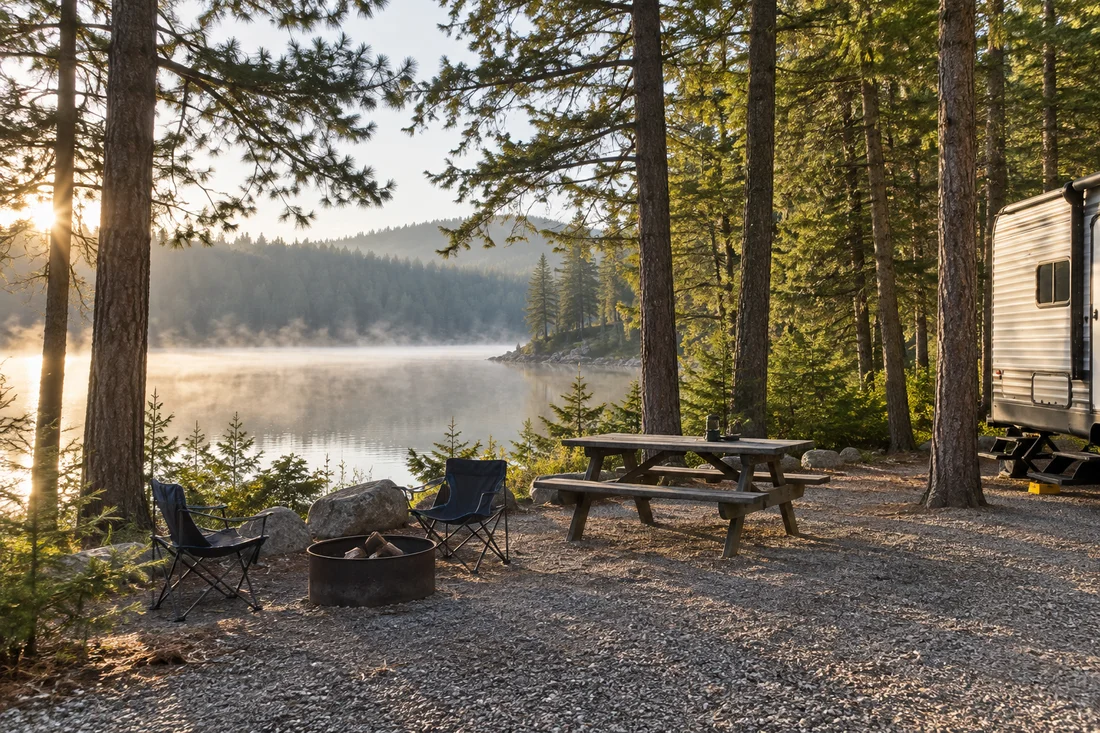
Campground style can matter as much as hookups. Oregon Dunes KOA Holiday describes itself as an off-road campground, with quads and side-by-sides traveling in and out during the day. That is useful information for both riders seeking an active base and travelers hoping for a different atmosphere. Begin with the experience you want before deciding whether an available space is the right choice.
Take the operator’s description seriously
The official operator page advertises ATV and ORV access to Oregon Dunes National Recreation Area and states that off-road vehicles move through the campground from 8 a.m. to 10 p.m. It also asks tent campers without ATVs to call and discuss options. These details deserve attention before booking. An off-road base can be a good match for a riding trip while requiring different expectations for an evening at camp.
If riding is the purpose, verify the current requirements for the public recreation area separately with its managing agency. Campground access does not establish every permit, equipment, route, or operating rule for public land. Write down what you need to confirm and use the official sources for each responsibility. Rental arrangements, if needed, also deserve their own terms and equipment checks.
Account for the equipment at the campsite
A trip with additional recreation equipment can change the space required even when the RV itself is unchanged. Explain the complete configuration to the operator: tow vehicle, trailer or motorhome, any additional trailer, and equipment to be stored on site. Ask where each item may be parked. Do not assume an advertised long pull-through includes unlimited room outside the pad.
The operator publishes a ninety-five-foot maximum pull-through and a fifty-amp maximum. Those are advertised campground capabilities, not guarantees for every booking category. Compare the exact site’s length and service with your needs. Our campsite fit guide helps distinguish an overall maximum from a usable reservation for a particular combination.
Build a camp routine around the outing
Plan where riding gear, wet or sandy clothing, and cleaning supplies will go before the first day. Keep doorways and essential RV access clear. A small, consistent return routine prevents the living space from becoming the storage area for every piece of outdoor equipment. Divide chores so a single person does not spend the whole evening resetting camp while others relax.
Leave room in the itinerary for rest and equipment attention rather than assuming each available hour should be spent away from the campground. Confirm the current schedule and terms for any recreation amenities the family hopes to use. Seasonal activities should remain optional until their actual dates are established. The operator’s calendar and current information are more useful than an undated photograph.
Our Oregon Dunes KOA record preserves the official contact and booking starting point. Use it to investigate the current site choices and ask questions directly. If you are comparing a different sort of coastal stay, see our Costanoa planning guide. The point of that comparison is to select the atmosphere and services that fit your trip, with each campground evaluated on its own terms.