
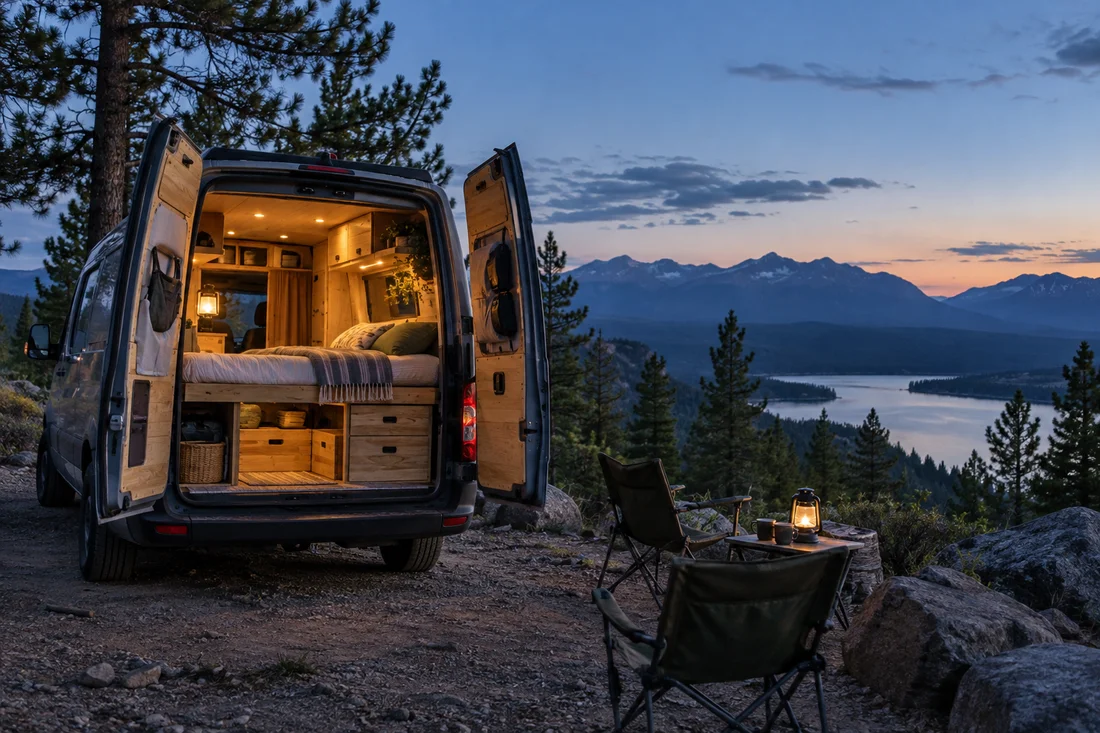
Solo van travel gives one person control of the itinerary and responsibility for the ordinary work. Plan the tasks as well as the destinations: driving, arriving, setting up, cooking, communicating, and restoring the vehicle for departure. A useful routine should fit the traveler and actual equipment without depending on an imagined helper at the next campsite.
Choose a manageable first sequence
For an unfamiliar van or routine, begin with a trip whose distances and confirmed overnight arrangements leave time to learn. Keep the first day’s activity modest. The goal is to understand the vehicle and your preferred rhythm before adding a complicated series of moves.
Review each setup task and identify anything you cannot confidently perform using the proper instructions. Obtain a competent demonstration or change the arrangement before departure. Do not force an unfamiliar lifting, loading, or mechanical task simply because a general online account makes it appear straightforward.
Use a deliberate contact plan
The National Park Service’s trip-plan resource describes recording the details of an outing and sharing them with a trusted contact. Use the applicable guidance to make a plan for the actual activities, including where you intend to go and how changes will be communicated. Official trip-plan resource.
Keep important information available offline and agree on a realistic process with the person involved. A general social-media update is different from a useful trip plan. Do not promise check-ins based on coverage you have not established; consider the communication requirements of the actual route and activity.
Make daily tasks easy to reach
Arrange food, clothing, lighting, instructions, and essential documents so normal use does not require unloading the van. Rehearse the evening and morning configurations. Note the items that become inaccessible when the bed is made and move the ones needed during that period.
Plan meals and activities that fit the amount of work you want to do alone. The NPS trip-planning guide emphasizes matching outings to experience, abilities, conditions, and equipment. Apply that thinking to a day hike as well as to the wider journey. Official planning guidance.
Simplify the first evening
Write the minimum sequence needed to settle in at a confirmed campsite: the vehicle’s required setup, a suitable meal, personal essentials, and the sleeping arrangement. Keep optional outdoor furniture and elaborate cooking separate. Practice reaching the relevant items with the van packed for travel. If an essential task needs another person, address the equipment or support arrangement before leaving. A solo routine can be deliberately simple without being improvised. The useful test is whether you understand each required step and can perform it appropriately without depending on help that has not been arranged.
Keep alternatives practical
Identify a suitable backup overnight option and a way to obtain appropriate assistance if equipment requires attention. Save the relevant contacts and instructions before traveling beyond a reliable connection. A change in plans should lead to another researched option rather than an uncertain improvised stay.
Use our campsite questions and the roadside-plan guide to organize those arrangements. Solo travel does not require doing every task the hard way. A thoughtful routine gives you more room to choose your pace because the essentials are understood and manageable.